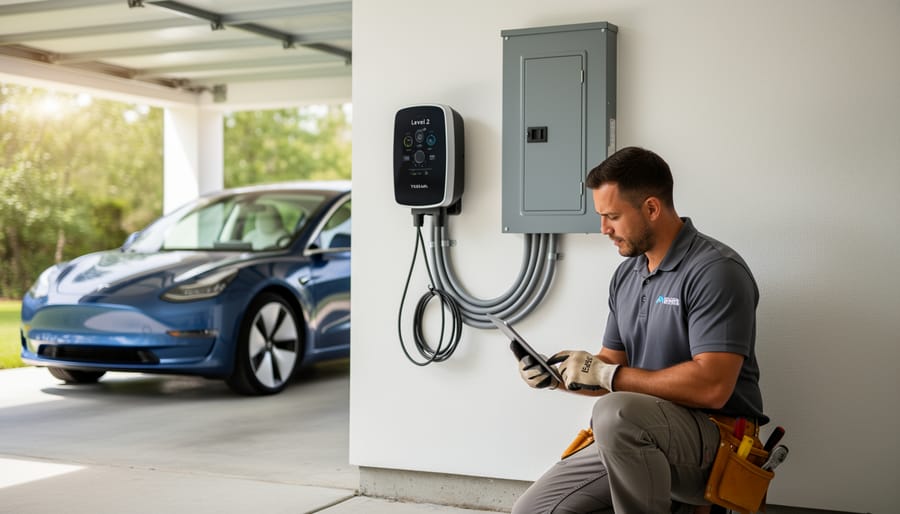
Verify your installer holds current electrical certifications and specifically specializes in electric vehicle charging systems, not just general electrical work. Request proof of licensing, insurance coverage (both liability and workers’ compensation), and ask how many EV chargers they’ve installed in the past year. A qualified professional should easily provide references from recent installations and walk you through their process without hesitation.
Request a detailed written estimate that itemizes equipment costs, labor, permit fees, and any electrical panel upgrades needed before installation begins. Many homeowners discover hidden costs too late, similar to how buyers researching companies that buy houses for cash must scrutinize fine print. The estimate should specify charger brands and models, clarifying whether you’re getting a Level 2 charger (the most common residential option) or if your electrical system requires modifications to support your vehicle’s charging requirements.
Confirm the installer understands federal and state incentive programs available in 2026. A knowledgeable professional will guide you through claiming tax credits and rebates that can offset 30% or more of installation costs. They should also help you select compatible equipment for your specific vehicle, whether you’re exploring Tesla EV charger options or universal charging solutions.
Check online reviews across multiple platforms, but focus on feedback mentioning post-installation support and warranty service. The cheapest quote often leads to problems down the road. Watch for red flags like pressure to sign immediately, requests for full payment upfront, or reluctance to provide documentation. Your charger installation is a long-term investment in sustainable transportation, and choosing the right installer protects both your home’s electrical safety and your vehicle’s charging needs for years ahead.
Why Your Installer Choice Matters More Than the Charger Itself
You might spend weeks researching the perfect Level 2 charger with all the latest features, only to discover it won’t charge your vehicle because the installer wired it incorrectly or connected it to an undersized circuit. The installer you choose determines whether your expensive hardware becomes a reliable daily tool or an expensive doorstop.
A botched installation creates problems that extend far beyond inconvenience. Improper wiring can trip breakers repeatedly, overheat electrical panels, or worse, start fires. Many homeowners don’t realize their charger manufacturer’s warranty becomes void the moment an unlicensed or improperly trained installer touches the equipment. You’re left holding the bill for replacement hardware that failed due to installation errors, not manufacturing defects.
Code compliance isn’t bureaucratic red tape. It’s the framework that ensures your installation meets safety standards and won’t cause problems when you sell your home. An installer who skips permits or doesn’t understand local electrical codes leaves you with an illegal installation that home inspectors will flag. You’ll face costly corrections before closing, and your insurance company might deny claims if an undocumented installation causes damage.
The relationship doesn’t end when the installer drives away. Electrical systems need occasional service, utility companies update net metering requirements, and you might want to upgrade your system later. An installer with proper EVITP training and certification understands these evolving standards and can support your system long-term.
Your installer determines load calculations, circuit sizing, panel capacity assessment, and whether your home’s electrical infrastructure can safely handle the additional demand. These decisions affect reliability, safety, and your home’s resale value far more than whether your charger has a smartphone app.
Essential Credentials and Certifications to Look For
Understanding EV-Specific Training
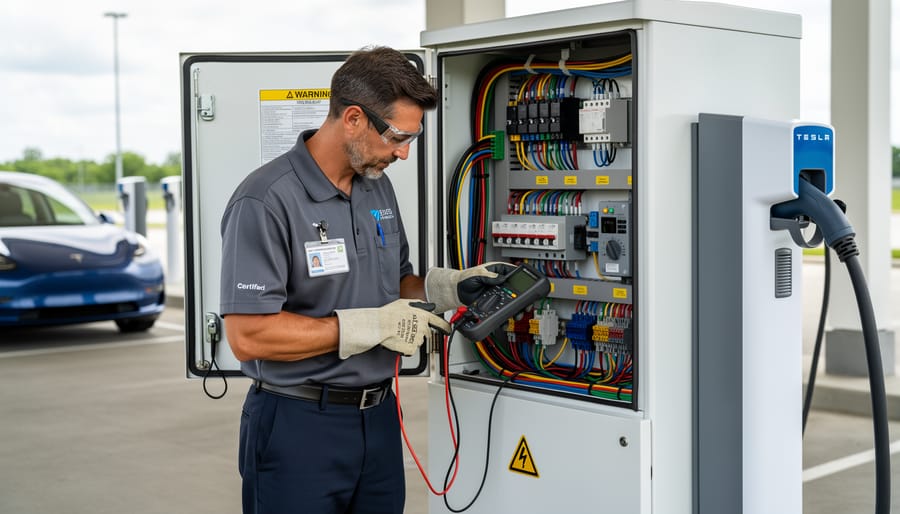
Not all electricians are qualified to install EV chargers safely, even if they’ve worked in the trade for decades. The electrical demands and safety protocols for EV charging stations differ significantly from standard residential wiring, which is why specialized training matters.
The Electric Vehicle Infrastructure Training Program (EVITP) represents the gold standard in EV charger installation credentials. This nationally recognized certification ensures electricians understand the unique requirements of EVSE (Electric Vehicle Supply Equipment), including proper grounding techniques, load calculations specific to EV charging, and the nuances of communication between the charger and your vehicle. An EVITP-certified installer has completed rigorous classroom and hands-on training beyond their basic electrical license.
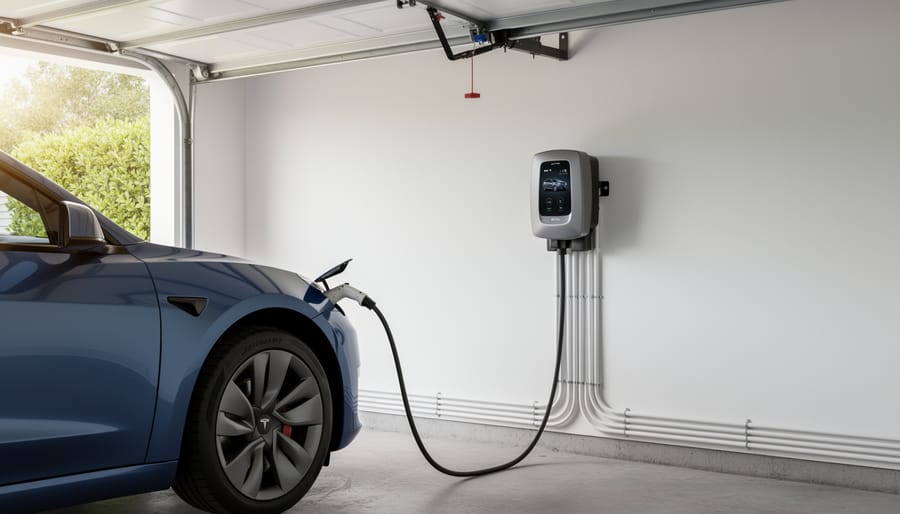
Beyond EVITP, many charger manufacturers offer their own training programs. A Tesla-certified installer, for example, has learned the specific requirements for Wall Connector installations, including optimal placement and integration with the Tesla ecosystem. Similarly, ChargePoint, JuiceBox, and other major brands provide specialized training on their products’ features and installation best practices.
Why does this matter to you? Certified installers can troubleshoot problems faster, optimize charging speeds based on your electrical panel’s capacity, and ensure your installation meets warranty requirements. Many charger manufacturers actually require certified installation to maintain warranty coverage. An installer who’s completed manufacturer-specific training also stays current on firmware updates and common technical issues, saving you headaches down the road.
Insurance and Liability Protection
Before an installer touches your electrical panel, verify they carry comprehensive general liability insurance and workers’ compensation coverage. Request certificates of insurance directly from their carrier, not just a photocopy the installer provides, which could be outdated or fabricated.
General liability insurance protects you if the installer damages your home during work or if their installation causes problems later. A minimum of $1 million coverage is standard, but $2 million offers better protection. Workers’ compensation covers injuries to their employees on your property, preventing you from being sued if an accident occurs.
If something goes wrong months after installation, say, faulty wiring causes a fire or the charger damages your vehicle’s battery, proper insurance determines whether you’re protected or facing thousands in out-of-pocket repairs. Some homeowners’ insurance policies exclude damage from improperly licensed electrical work, making the installer’s coverage your only recourse.
Contact the insurance company listed on the certificate to confirm the policy is current and covers electrical work specifically. Installers working without adequate insurance shift all risk onto you, making even a low bid potentially your most expensive choice.
Questions to Ask Before You Commit
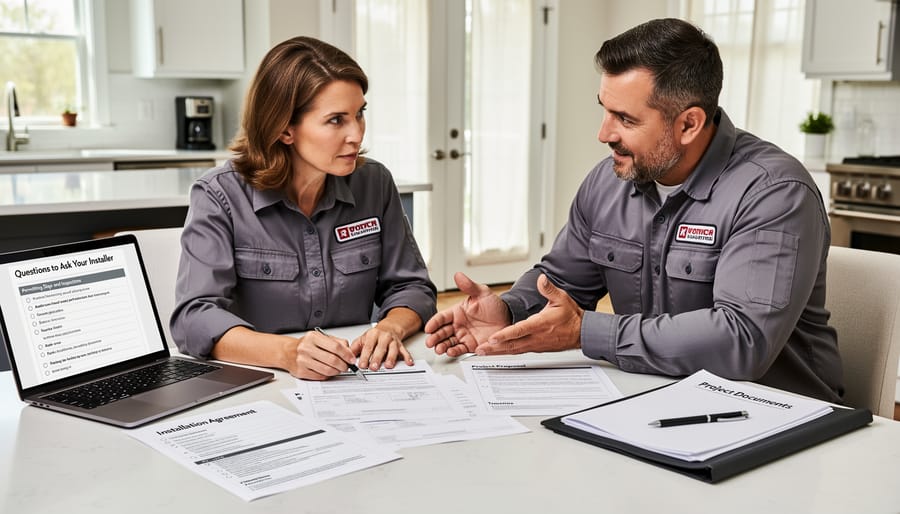
Walking into a consultation armed with the right questions separates informed buyers from those who end up with regrets. The questions you ask reveal not only what the installer knows, but how they operate and whether they respect your investment.
Start with the fundamentals that establish their track record and approach. These questions should feel like a conversation, not an interrogation, but pay close attention to how directly they answer.
- How many EV charger installations have you completed in the past year, and can I see photos or visit a recent installation? Specific numbers matter more than vague claims of experience. An installer doing this regularly should have a portfolio.
- What brands of chargers do you recommend for my situation, and why? This reveals whether they push one product because of kickbacks or genuinely assess your needs. They should ask about your vehicle, driving habits, and electrical setup before recommending anything.
- Will you handle the permit process, and what does that involve in my area? A qualified installer knows local requirements cold and includes permitting in their service. If they suggest skipping permits to save money, that’s an immediate red flag.
- What’s the realistic timeline from contract signing to final inspection? Honest installers account for permit approval times, potential panel upgrades, and inspection scheduling. Promises of installation within days often mean corners will be cut.
- Are you familiar with federal and state incentives available in 2026, and will you help me access them? Installers who stay current on programs like the Alternative Fuel Vehicle Refueling Property Credit can guide you through documentation requirements that maximize your rebates.
- What warranty do you offer on your installation work, separate from the charger warranty? Equipment warranties don’t cover installation errors. You want at least a one-year workmanship guarantee, ideally longer.
- Will you assess my electrical panel before quoting, and what happens if upgrades are needed? Any quote given without seeing your panel is essentially fiction. They should explain upgrade costs separately and clearly.
Beyond these core questions, probe how they handle problems. Ask what happens if the inspector finds issues, who pays for corrections, and how they manage communication throughout the process. An installer who gets defensive or vague when you ask about contingencies probably handles actual problems poorly.
Watch for responses that feel rehearsed versus thoughtful. When you ask about their experience, a good installer might share a specific challenging installation and how they solved it. That’s far more valuable than generic reassurances that everything always goes smoothly. Trust your instincts, if someone makes you feel foolish for asking questions, imagine how they’ll treat you when you call with a concern after installation.
Understanding the Installation Process and Timeline
A professional EV charger installation follows a predictable sequence, and understanding each phase helps you recognize when an installer is cutting corners. The process begins with an on-site assessment where the electrician evaluates your electrical panel capacity, the distance from the panel to your desired charger location, and the condition of your existing wiring. This initial visit typically takes 30 to 60 minutes. An installer who quotes you over the phone without seeing your property is skipping a critical step that often leads to surprise costs or incomplete work.
After the assessment, expect a detailed written proposal outlining the work scope, materials needed, and any electrical upgrades required. Many homes need a panel upgrade or dedicated circuit installation, which can add both cost and time. The installer should then handle permit applications, a process that varies by municipality but usually takes one to three weeks. Some jurisdictions require additional approvals for apartment EV chargers or multi-unit dwellings.
The actual installation work ranges from four hours for a straightforward setup to two full days if electrical panel modifications are necessary. A licensed electrician will mount the charging unit, run appropriate gauge wiring through conduit, install a dedicated breaker, connect and test the charger, and ensure proper grounding. Cutting corners on conduit installation or using undersized wire creates fire hazards that won’t show up immediately.
The final step involves a municipal inspection to verify code compliance, which can take another week to schedule depending on your area’s inspection backlog. Your installer should coordinate this and be present for the inspection. The entire process from signing a contract to having a fully operational, inspected charger typically spans three to six weeks.
Installers promising completion in a few days are either skipping permits, which puts you at risk, or they don’t have enough work, which raises its own concerns.
How to Evaluate Quotes and Pricing Transparency
Breaking Down the Cost Components
A transparent installer breaks down costs into four main categories. Labor typically ranges from $300 to $800 for a straightforward installation, but jumps to $1,500 or more if extensive electrical work is needed. This includes the electrician’s time for site assessment, installation, testing, and cleanup.
Materials encompass the mounting hardware, conduit, wiring, junction boxes, and circuit breakers, usually $150 to $400 depending on the distance from your electrical panel to the charger location. Longer runs mean more materials and higher costs.
Permits and inspections add $50 to $200 in most jurisdictions. Some installers include this in their quote; others charge separately. Always clarify whether permit fees are bundled or additional.
The wildcard is electrical panel upgrades. If your current panel lacks capacity or available breaker slots, you’re looking at $1,200 to $3,000 for a panel upgrade or subpanel installation. This single factor explains why quotes can vary dramatically between homes. An installer who spots this need during the site assessment is doing their job; one who discovers it halfway through installation is cutting corners on preparation.
Distance from panel to charging location also drives costs significantly. Every additional 50 feet of wiring run can add $200 to $400 in materials and labor. This is why garage installations near the main panel cost substantially less than driveway installations on the opposite side of the house.
Maximizing Government Incentives and Rebates in 2026
The federal government’s Alternative Fuel Vehicle Refueling Property Credit now covers 30% of installation costs up to $1,000 for residential chargers installed through 2032. Many states and utilities stack additional rebates on top, California’s Clean Vehicle Rebate Project offers up to $2,000 for income-qualified households, while Massachusetts provides rebates covering 60-100% of equipment and installation costs depending on location and income level.
An installer who knows these programs handles the paperwork correctly from the start. They’ll ensure your equipment meets program requirements before ordering, submit proper documentation with permit applications, and complete installation within program deadlines. This matters because incentive applications often require specific invoice formats, certification numbers, and inspection results that general electricians might not know about.
Beyond direct charger incentives, many programs connect to broader electrification goals. If you’re planning to charge a Tesla with solarcoordinated incentives can significantly reduce both systems’ costs when installed together. Some utilities offer time-of-use rates that reward charging during off-peak hours, while federal solar tax credits can make solar more affordable when paired with EV charging infrastructure.
Ask potential installers which specific programs they’ve successfully navigated for recent customers in your area. Request examples of completed rebate applications and timeline estimates for receiving funds. Installers experienced with incentive programs save you follow-up headaches and often expedite approval processes through established utility relationships.
Reading Reviews and Checking References the Smart Way
Online reviews can be manipulated, so you need to read them strategically rather than just checking star ratings. Look for patterns across multiple platforms like Google, Yelp, and the Better Business Bureau. Genuine reviews typically include specific details about the installation process, timeline, communication style, and problem-solving when issues arose. Generic praise like “great service, highly recommend” without context often signals fake testimonials. Pay attention to negative reviews too. How does the installer respond? Professional, solutions-oriented responses to complaints demonstrate accountability, while defensive or dismissive replies are concerning.
Don’t stop at online research. Ask your shortlisted installers for three to five references from recent jobs, ideally within the past six months. Any installer confident in their work will provide these gladly. When you contact references, skip yes-or-no questions and ask open-ended ones that reveal real experiences. How did the installer handle unexpected complications? Did they show up on time and stick to the quoted timeline? Was the worksite left clean? Did the charger work perfectly from day one, or were follow-up visits needed? Would you hire them again?
Also ask references about the permit and inspection process. Did the installer handle everything, or did the homeowner have to chase paperwork? This reveals organizational competence. If an installer hesitates to provide references or offers only one or two vague contacts, that’s a red flag. Established professionals build their reputation on satisfied customers and welcome the opportunity to showcase their work through real client experiences.
Red Flags That Signal You Should Walk Away
# Response
Trust your instincts when something feels off during your installer search. Certain warning signs should end the conversation immediately, no matter how appealing the initial pitch sounds.
High-pressure sales tactics rank among the biggest red flags. If an installer pushes you to sign a contract today with claims about expiring discounts or limited availability, walk away. Legitimate professionals give you time to review proposals and compare options. This same urgency tactic appears in scam operations across industries, from home improvement cons to fraudulent cash house buyers.
Run from anyone who cannot produce current electrical licensing, insurance certificates, or relevant EV training credentials when asked. Vague responses like “we’re certified” without documentation mean they likely lack proper qualifications. Similarly, installers who dismiss the need for permits or suggest skipping the inspection process are putting you at serious legal and safety risk.
Verbal estimates without detailed written breakdowns signal trouble ahead. Professional installers provide itemized quotes covering labor, materials, permits, and any potential electrical upgrades. If they refuse to put pricing in writing or the estimate seems drastically lower than competitors without clear explanation, expect hidden charges later or substandard work.
Watch for dismissiveness about your electrical panel capacity. Any installer who claims they can install a Level 2 charger without assessing your panel first either lacks expertise or plans to cut corners. Proper assessment is non-negotiable, as inadequate electrical capacity creates fire hazards and constant breaker trips.
Finally, avoid installers unfamiliar with government incentive programs in 2026. This knowledge gap suggests they rarely work with EV installations, making you their learning experiment rather than a valued customer.
Choosing the right EV charger installer isn’t just another item to tick off your to-do list, it’s a decision that affects your daily life, your home’s electrical safety, and your long-term charging costs. The installer you select will determine whether you enjoy years of hassle-free charging or face repeated service calls, safety concerns, and potential equipment failures.
Take your time with this decision. A qualified installer with proper credentials, transparent pricing, and a track record of satisfied customers is worth waiting for. The few extra days or slightly higher upfront cost pale in comparison to the headaches and expenses of fixing a botched installation or dealing with an unresponsive contractor when problems arise.
Remember that you’re not just buying an installation service. You’re establishing a relationship with someone who understands your home’s electrical system and can support you as EV technology evolves. The best installers will help you maximize government incentives in 2026, ensure your setup can handle future upgrades, and provide the documentation you need for warranty claims and resale value.
Trust your instincts. If something feels off during your conversations with potential installers, whether it’s evasive answers, pressure to sign immediately, or unwillingness to explain their process, move on to the next candidate. Your peace of mind and the safety of your home are too important to compromise for convenience or a discount that seems too good to be true.