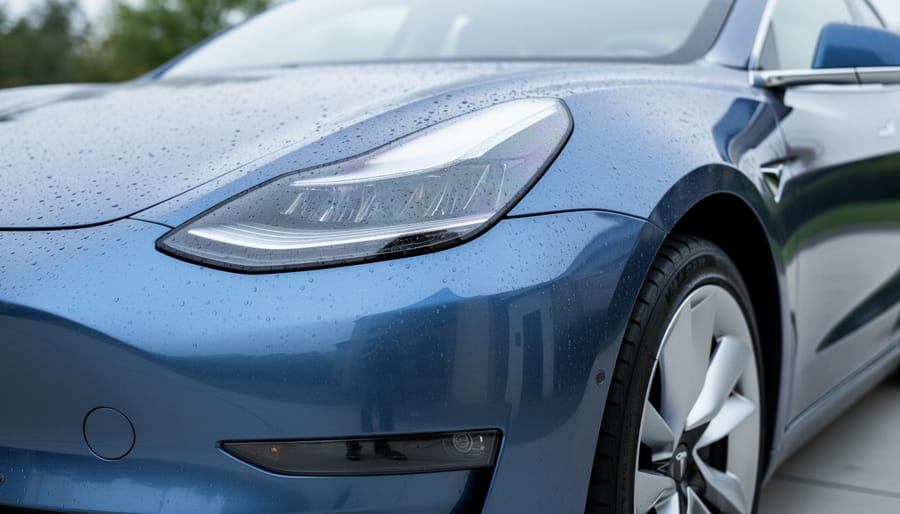
Electric vehicles need the same fundamental paint protection as gas-powered cars, regular washing, waxing, and shielding from environmental damage, but a few EV-specific considerations make maintenance even more important for preserving your investment.
Your EV’s paint faces unique challenges. Charging port areas accumulate residue from frequent handling and exposure to the elements. The silent operation means you might not notice small debris strikes as readily. Battery-related underbody panels, which protect critical components, require extra attention to prevent corrosion that could compromise efficiency.
Because many EV owners choose electric vehicles for environmental reasons and often power them with renewable energy like solar to charge their batteries, maintaining the paint aligns with that sustainability mindset. A well-protected finish lasts longer, reducing the need for energy-intensive repainting and helping retain resale value. Premium EV paint repairs can run hundreds to thousands of dollars, making prevention worthwhile.
The following seven tips balance proven paint care practices with EV-specific concerns. You’ll learn how to protect high-touch zones around charging ports, maintain the specialized coatings many manufacturers apply, and choose eco-friendly products that complement your vehicle’s green credentials while keeping it looking showroom-fresh for years.
Why EV Paint Care Matters for Your Investment
Your EV represents a substantial commitment to sustainable transportation, often costing $40,000 to $100,000 or more. That investment deserves protection. Proper paint maintenance directly impacts resale value, with well-maintained EVs commanding 15-20% higher prices than neglected counterparts when it’s time to sell or trade. Given that EVs already hold their value better than many traditional vehicles due to lower depreciation on battery technology, protecting the exterior finish maximizes your return.
Modern electric vehicles often feature advanced paint technologies designed to complement their aerodynamic profiles and eco-conscious design. Many manufacturers apply multi-stage paint systems with specialized clear coats that enhance efficiency by reducing drag and reflecting heat. These sophisticated finishes require thoughtful care. Regular maintenance with quality car polish and protective treatments preserves these advanced coatings, preventing oxidation and environmental damage that can compromise both appearance and functionality.
Beyond financial considerations, maintaining your EV’s appearance reinforces your environmental commitment. A sharp, well-kept finish demonstrates pride of ownership and signals to others that sustainable choices don’t mean compromising on quality or aesthetics. Your EV’s exterior serves as a visible statement about valuing both innovation and responsibility. When you protect that finish, you’re extending the useful life of materials already produced, reducing the environmental cost of premature repainting or panel replacement.
How We Chose These Paint Care Tips
We selected these seven paint care tips based on five key criteria that ensure they’re practical and effective for today’s EV owners.
Our selection focused on:
- Compatibility with modern EV paint finishes and coatings used by manufacturers in 2026
- Accessibility for average owners without requiring professional equipment or specialized training
- Environmental friendliness of products and techniques that align with sustainable vehicle ownership
- Cost-effectiveness balanced against long-term protection benefits
- Professional recommendations from automotive care experts and EV manufacturer maintenance guidelines
Each tip had to pass all five criteria to make our list. We prioritized methods that real EV owners can implement at home while protecting their investment and staying true to the environmental values that often drive electric vehicle adoption. The techniques we’ve included represent the intersection of effectiveness, practicality, and sustainability, ensuring you can maintain your EV’s finish without compromising on any of these essential factors.
1. Regular Hand Washing with pH-Neutral Products
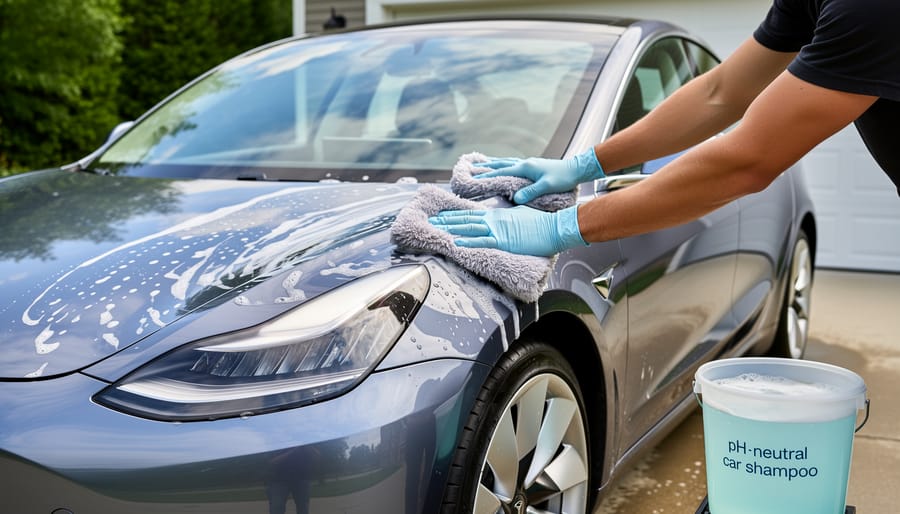
Hand washing your EV gives you control that automated car washes simply can’t match. Those spinning brushes and harsh chemicals in automatic bays can leave swirl marks and gradually degrade your paint’s protective clear coat. When you wash by hand, you’re using gentle pressure and can navigate around sensitive areas like charging ports and door handles without risking damage.
The two-bucket method is your best friend here. Fill one bucket with water and pH-neutral car soap, the other with clean rinse water. Before touching your paint, dip your wash mitt in the soapy water, clean a section, then rinse the mitt in the clean water bucket to remove dirt particles. This prevents you from dragging contaminants across your paint and creating those annoying scratches.
pH-neutral soaps matter more than you might think. Many household detergents and dish soaps are highly alkaline or acidic, which strips away wax, sealants, and protective coatings you’ve applied. A pH-balanced formula cleans effectively without compromising those protective layers, and it’s gentler on your EV’s rubber seals and charging port covers.
Look for eco-friendly soap options that align with your decision to drive electric. Biodegradable, plant-based car wash solutions clean just as effectively as conventional products without introducing harsh chemicals into storm drains and waterways. Brands like Chemical Guys EcoSmart or Meguiar’s Ultimate Wash & Wax offer effective, environmentally responsible choices.
Wash in shade when possible and rinse thoroughly, paying special attention to panel gaps and the charging port area where soap residue can accumulate. This simple routine every two weeks keeps your EV looking sharp while protecting your investment.
2. Apply Paint Sealant or Ceramic Coating for Long-Term Protection
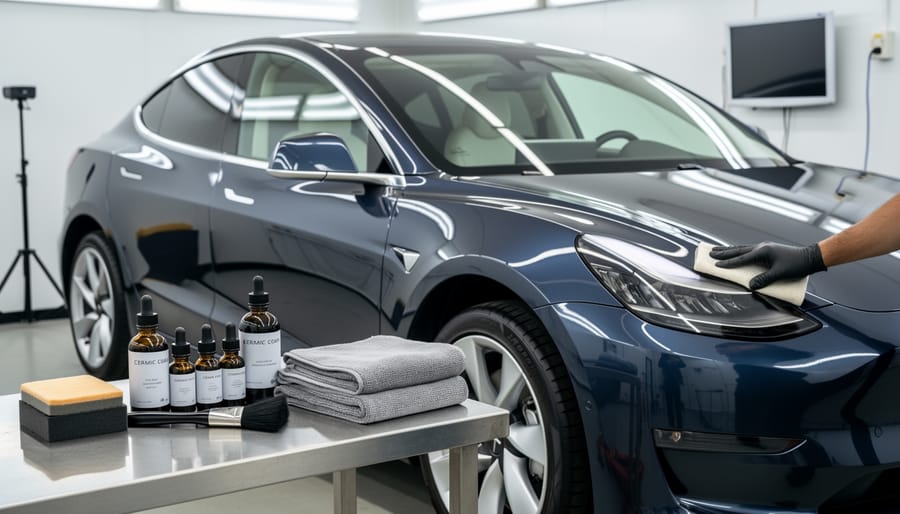
Modern paint sealants and ceramic coatings create a formidable barrier between your EV’s finish and the elements, delivering protection that far outlasts traditional wax. These advanced solutions bond chemically with your paint, forming a hydrophobic layer that repels water, dirt, and contaminants with remarkable efficiency.
UV protection stands out as particularly valuable for EV owners. If you park outdoors while your vehicle charges, whether at home, work, or public stations, prolonged sun exposure can fade and oxidize paint over time. Quality sealants and ceramic coatings contain UV inhibitors that shield the finish from this damage, preserving the colour depth and gloss that give your EV its sharp appearance.
The hydrophobic properties mean water beads up and rolls off the surface, taking dirt and grime with it. This self-cleaning effect keeps your EV looking fresher between washes and makes routine cleaning faster and easier. You’ll also find that contaminants like bird droppings, tree sap, and road tar struggle to bond with the protected surface, reducing the risk of paint etching.
DIY paint sealants typically cost £20-60 and last six to twelve months. They’re straightforward to apply with a foam applicator and provide solid protection for budget-conscious owners. Professional ceramic coatings, meanwhile, run £300-1,500 depending on the product grade and preparation work. These professional-grade coatings last three to seven years, offer superior hardness and scratch resistance, and often include warranties. The initial cost is higher, but the extended protection and reduced need for frequent polishing make ceramic coatings a worthwhile investment for protecting your EV over the long term.
3. Polish Strategically to Remove Minor Imperfections
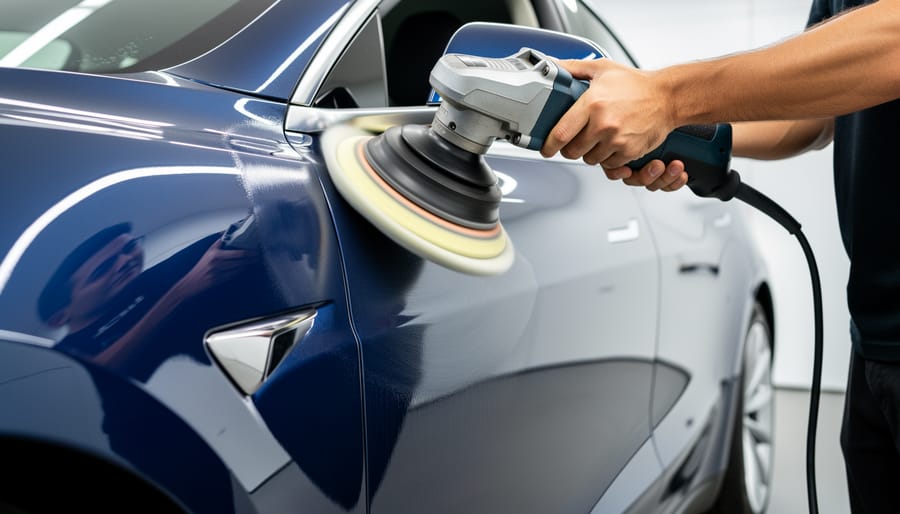
Polish removes a microscopic layer of clear coat to eliminate surface defects, making it a powerful but precise tool in your EV maintenance routine. You’ll want to polish your electric vehicle only when you notice visible swirl marks, light scratches, or the dull haze of oxidation, typically once or twice yearly for most owners.
Understanding the distinction between compound and polish matters for protecting your EV’s finish. Compounds use coarser abrasives to remove deeper scratches and heavy oxidation, while polishes contain finer particles for refining the surface and restoring gloss after compounding. Start with the least aggressive option that addresses your paint’s condition, as modern EV paint layers can be thinner than traditional automotive finishes.
Orbital polishers deliver consistent results with less risk of burning through clear coat than rotary models, making them ideal for DIY enthusiasts. Set the machine to medium speed, work in two-foot sections, and keep the pad flat against the paint with light to moderate pressure. Make three to four overlapping passes in different directions, letting the polisher do the work rather than pressing hard. Hand application works for small areas or touch-ups: apply polish to a foam applicator pad, work in small circles with moderate pressure, then switch to straight, overlapping lines.
Always polish in a shaded area or your garage. Direct sunlight causes polish to dry too quickly, creating stubborn residue and preventing proper correction. The heat also makes it difficult to see your progress clearly.
Check your work frequently by wiping a section clean with a microfiber towel. If defects remain after two or three polishing sessions on the same area, you’ve likely reached the limit of what’s safely removable. Over-polishing risks compromising your clear coat’s protective thickness, potentially leading to premature paint failure that contradicts your commitment to maintaining a long-lasting, sustainable vehicle.
4. Protect Against Environmental Contaminants with Clay Bar Treatment
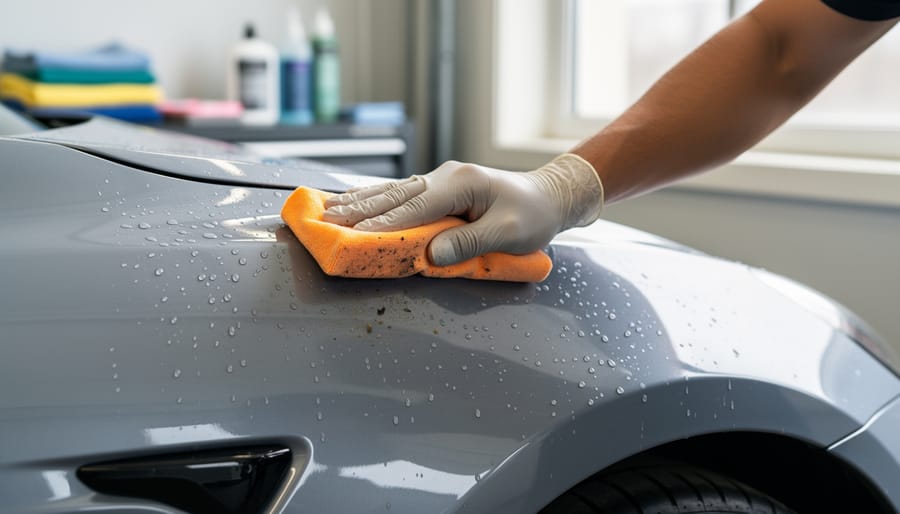
Your EV’s paint collects contaminants that standard washing can’t touch. Iron particles from brake dust, sticky tree sap, tar spots, and industrial fallout bond to the clear coat despite your best washing efforts. Run your hand across your paint after washing; if it feels rough or gritty rather than glass-smooth, these embedded contaminants are the culprit.
Clay bar treatment physically lifts these bonded particles without scratching your paint. The synthetic clay bar glides across lubricated paint, grabbing embedded contaminants and pulling them away from the surface. It works like an eraser, removing what’s stuck without removing your clear coat.
The process itself is straightforward. After washing your EV thoroughly, spray a clay lubricant on a small section of paint, then gently glide the clay bar back and forth using light pressure. You’ll feel the surface become smoother as contaminants transfer to the clay. Fold and knead the clay frequently to expose clean surfaces, and work in manageable two-foot sections.
Most EV owners need clay bar treatment two or three times per year, though parking location matters significantly. If you park under trees, near industrial facilities, or close to rail lines, quarterly treatments make sense. Coastal environments with salt spray or urban areas with heavy pollution also accelerate contamination.
Clay treatment creates the perfectly clean canvas for your next protective step. Sealants and ceramic coatings bond far better to decontaminated paint, maximizing their protective benefits. Think of claying as essential prep work that extends the effectiveness of whatever protection you apply afterward, ultimately reducing how often you’ll need to polish or correct your EV’s finish.
5. Maintain Battery-Area Panels and Undercarriage Cleanliness
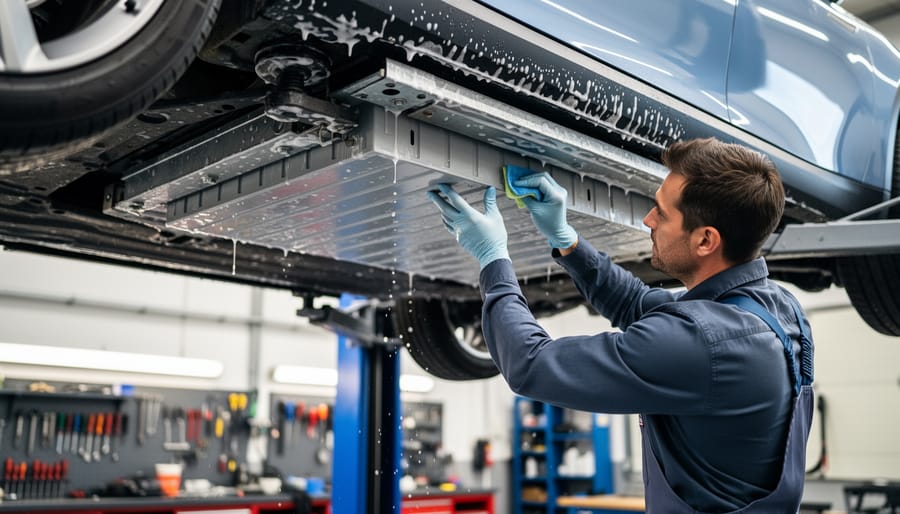
Your EV’s battery pack and undercarriage panels need attention that most gas-powered vehicles don’t require. The sealed battery housing underneath your vehicle accumulates road grime, salt, and debris that can compromise protective coatings and potentially affect thermal management over time. While the battery itself is well-protected, keeping these areas clean prevents corrosion of mounting hardware and maintains the efficiency of cooling systems designed to regulate battery temperature.
Rinse your EV’s undercarriage every 4-6 weeks using moderate water pressure from a garden hose or touchless car wash setting. Focus on removing accumulated dirt from the battery pack’s exterior panels and the surrounding areas where road salt tends to collect.
Winter climates demand more frequent attention. Road salt is particularly aggressive toward metal components and can eat away at protective coatings if left to sit for weeks. After driving in salty conditions, a simple undercarriage rinse within a day or two makes a significant difference in preventing corrosion. Pay attention to the lower door edges and rocker panels too, as these painted surfaces face the same salt exposure.
This maintenance connects directly to your EV’s environmental mission. A well-maintained battery system operates more efficiently, maximizing your electric range and minimizing the environmental footprint per mile driven. Preventing corrosion also extends component life, reducing the need for replacement parts and the manufacturing impact that comes with them. Clean undercarriage panels contribute to better aerodynamics as well, though the effect is modest. Think of this care as protecting the heart of your sustainable transportation investment.
6. Address Charging Cable Marks and Port Area Care
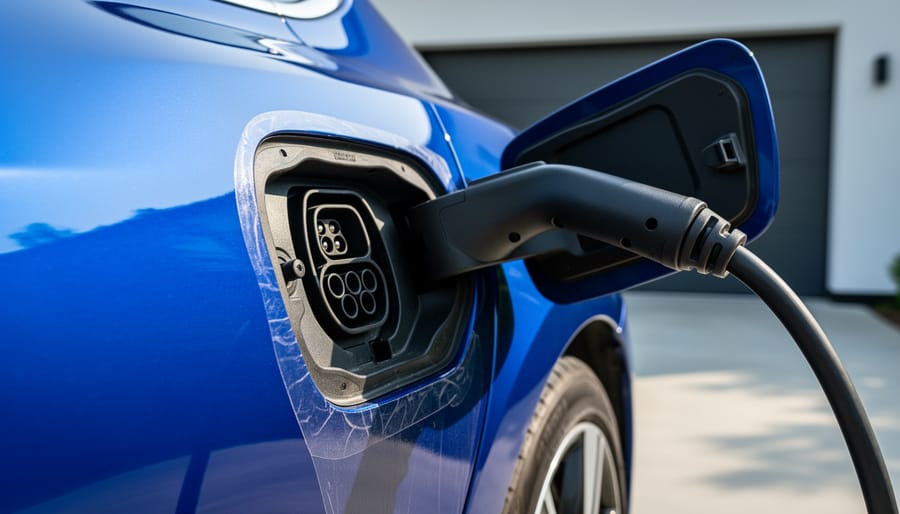
Charging ports are one of the few areas where EVs face truly unique paint care challenges. The repeated plugging and unplugging of cables creates friction points that can scuff or scratch the painted surfaces surrounding the port, especially if you’re charging daily.
The most effective prevention method is developing a mindful approach to cable handling. Support the cable connector as you guide it into the port rather than letting it drag across painted surfaces. This simple technique eliminates most contact-related marks before they start. When disconnecting, pull straight out instead of at an angle to minimize cable swing against the vehicle’s body.
Many EV owners apply small sections of clear protective film around their charging ports as insurance against inevitable contact. These transparent adhesive films absorb the minor abrasions that would otherwise affect your paint, and they’re replaceable when they show wear. Professional installers can cut precise patterns for your specific EV model, or DIY kits offer pre-cut shapes for popular vehicles.
Keep both the port cover and surrounding area clean using a microfiber cloth and pH-neutral cleaner. Avoid spraying cleaning products directly into the port itself. Dust and grime that accumulate around port edges can act like sandpaper when the cover opens and closes, gradually wearing the finish.
Check the port cover’s rubber gasket periodically. A damaged gasket may allow water intrusion while also causing the cover to bind against paint during operation, creating unnecessary wear points that compromise your EV’s appearance.
7. Use Paint Protection Film on High-Impact Areas
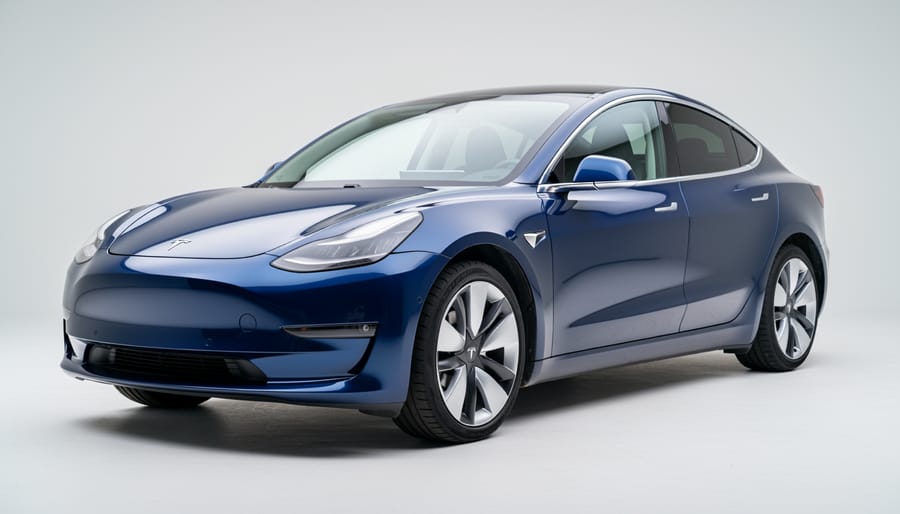
Paint protection film represents one of the smartest investments you can make for your EV’s long-term appearance. This nearly invisible urethane film shields vulnerable areas from the relentless assault of road debris, stone chips, bug splatter, and everyday wear that gradually degrades even the most durable factory paint.
Professional installers typically recommend covering the full front bumper, hood leading edge, fender areas behind the front wheels, door handle cups, rocker panels, and the rear bumper’s loading edge. These high-impact zones take the brunt of highway driving and parking lot encounters. Quality PPF features self-healing properties that use heat from the sun or warm water to erase light scratches and swirl marks, keeping protected areas looking pristine for years.
The upfront cost runs from $1,500 for partial front coverage to $6,000 or more for full-vehicle application. That might seem steep, but consider the alternative: a single bumper respray can cost $800 to $1,500, and repainting carries significant environmental consequences through VOC emissions and material waste. For EVs, this calculation becomes even more compelling. Your vehicle already represents a substantial investment in sustainable transportation, often $5,000 to $15,000 more than comparable gas models even after government incentives.
Protecting that investment makes financial and environmental sense, especially when you factor in electricity prices that make operating your EV economical over time, and considerations like apartment EV chargers that represent your commitment to sustainable living. PPF preserves resale value while preventing the need for future paint work, reducing your vehicle’s lifetime environmental footprint. The film typically lasts seven to ten years before requiring replacement, effectively paying for itself through avoided repairs and maintained vehicle value.
Common Questions About EV Paint Care
Do EVs have different paint than gas cars?
No, electric vehicles use the same automotive paint systems as traditional vehicles, typically a primer, base coat, and clear coat. Some manufacturers may offer unique color options or slightly different application techniques, but the paint chemistry and care requirements remain essentially identical.
Can I use the same products on my EV?
Yes, you can use the same pH-neutral car wash soaps, polishes, sealants, and waxes on your EV that you’d use on any modern vehicle. Just ensure products are safe for clear coat finishes and avoid harsh chemicals near charging ports and electrical components.
How does frequent charging affect paint around the port?
Frequent plugging and unplugging can cause cable rub marks, minor scratches, or scuffing around the charging port area. Applying paint protection film to this high-contact zone or handling cables carefully minimizes wear, and occasional polishing can remove light surface marks before they become permanent.
Are automated car washes safe for EVs?
Automated car washes are generally safe for the electrical systems of EVs, but the harsh brushes and strong chemicals can damage paint finishes over time, creating swirl marks and dulling the clear coat. Hand washing remains the gentler, more protective choice for maintaining a sharp finish.
What’s the environmental impact of paint care products?
Many traditional car care products contain phosphates, petroleum distillates, and other chemicals that can harm waterways. Choosing biodegradable, phosphate-free soaps and waterless wash products reduces environmental impact, aligning your paint maintenance routine with the sustainable values behind EV ownership.
These questions reflect the practical concerns of EV owners who want to protect their investment while staying true to environmental principles. Understanding that your electric vehicle needs the same thoughtful care as any quality automobile helps you make informed decisions about products and techniques. When you’re exploring EV charger options for your home, consider how your charging setup affects paint care, wall-mounted units with proper cable management reduce the risk of dragging cables across painted surfaces. The good news is that sustainable paint care products have improved dramatically, letting you maintain your EV’s appearance without compromising the environmental commitment that likely influenced your vehicle choice in the first place.
Protecting your EV’s paint isn’t just about aesthetics, it’s about preserving the value of your sustainable investment and honoring the environmental commitment you made when choosing electric. Every wash, polish, and protective treatment you apply extends your vehicle’s life, delays the resource-intensive process of repainting, and keeps your EV looking as impressive as the day you drove it home.
The seven tips we’ve covered work together to create a comprehensive care routine that fits into your lifestyle while protecting what matters. Whether you’re hand washing with eco-friendly products, applying ceramic coating for long-term defense, or protecting high-impact areas with film, each step reinforces your dedication to maintaining this significant investment in green technology.
Think of paint care as an extension of your broader sustainability choices. Just as you might have explored government incentives when purchasing your EV or considered installing a home charging station to maximize convenience, maintaining your vehicle’s finish completes the picture of responsible ownership. A well-maintained EV holds its value better, requires fewer resources over its lifetime, and stands as a visible testament to the viability of electric transportation.
Your EV represents the future. Keep it looking sharp, and it will serve you well for years to come.