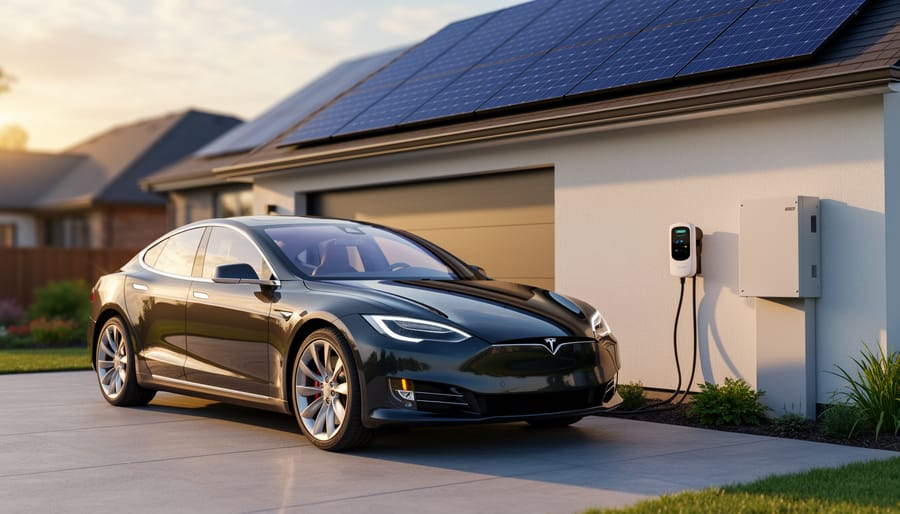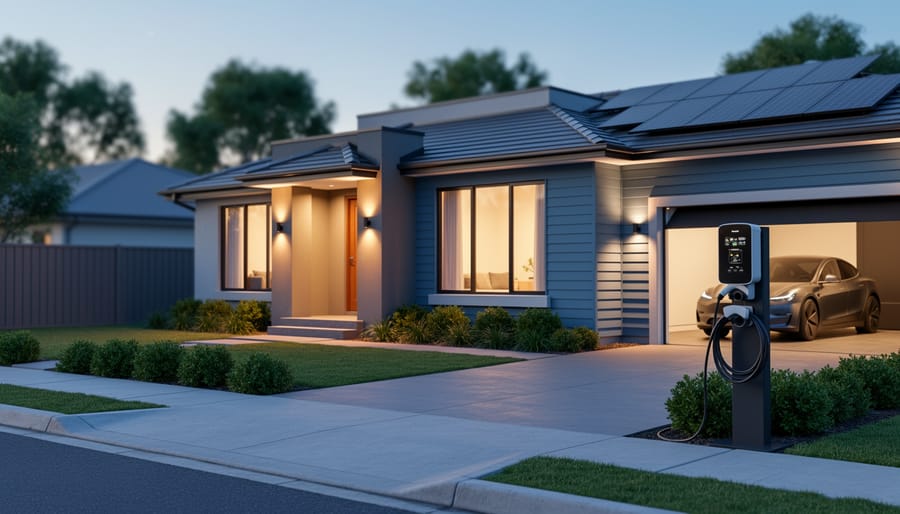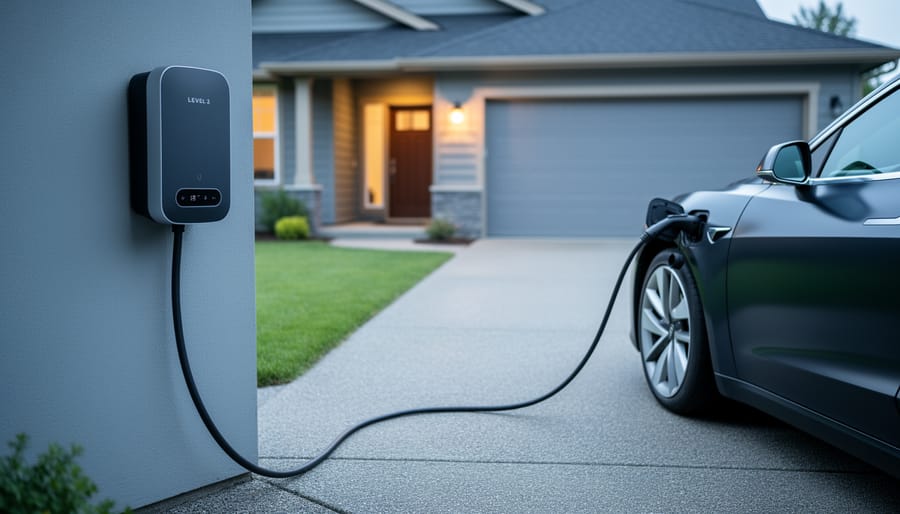
Electric vehicle charging point installation involves several cost components, and while standard Level 2 home chargers range from $400 to $1,200 for the equipment alone, the total investment depends heavily on your electrical infrastructure and local requirements.
The final price swings significantly based on three main factors: your home’s existing electrical capacity, the distance from your electrical panel to where you want the charger installed, and whether your setup requires a panel upgrade. Some homes are already wired to handle the additional load, while others need substantial electrical work before installation can begin.
Understanding where your money goes helps you budget accurately and identify potential savings. The charger unit itself represents just one piece of the puzzle. Installation labor, electrical upgrades, permitting, and inspection fees all contribute to your bottom line. If your electrical panel sits on the opposite side of your house from your garage or driveway, running new wiring drives costs up quickly.
Your home’s electrical system plays the biggest role in determining final costs. Older homes with 100-amp service often need a panel upgrade to 200 amps before adding a dedicated 240-volt circuit for EV charging. Newer construction frequently includes the necessary capacity, making installation more straightforward.
Professional installation ensures safety compliance and proper permitting, which protects both your investment and your home’s resale value. While the upfront expense may seem substantial, a properly installed charging point adds convenience and supports the transition to cleaner transportation right from your driveway.
Understanding the Total Investment: What You’ll Pay
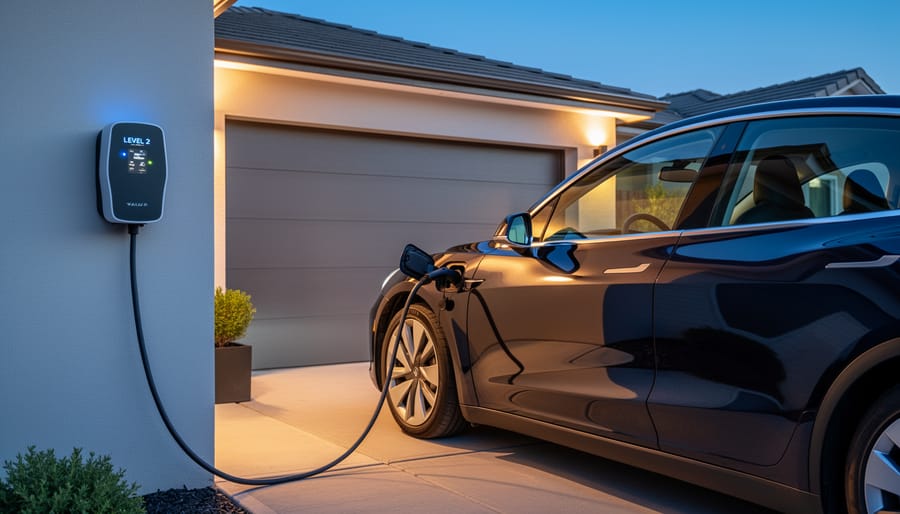
Home Charging Installation Costs
Most homeowners installing a Level 2 charger can expect the equipment itself to cost between $400 and $1,200. Where you land in that range depends largely on the features you choose, basic plug-and-charge units sit at the lower end, while chargers with Wi-Fi connectivity, scheduling capabilities, and energy monitoring push toward the higher price point.
Beyond the charger, you’ll need to factor in professional electrical installation. The complexity varies dramatically: if your garage already has a 240-volt circuit near where you want the charger, you’re looking at a simpler job. However, many homes require electrical panel upgrades to handle the additional load, especially if your current panel is already near capacity. This can add substantial cost to your project.
Don’t overlook permitting requirements. Most jurisdictions require electrical permits for charging point installations, typically running $50 to $200. Your electrician usually handles the paperwork, but the fee adds to your bottom line.
One important note: the federal EV charger tax credit that covered 30% of installation costs up to $1,000 expired on June 30, 2026. While some state and utility incentives remain available, this federal support is no longer an option for new installations.
Commercial Charging Point Costs
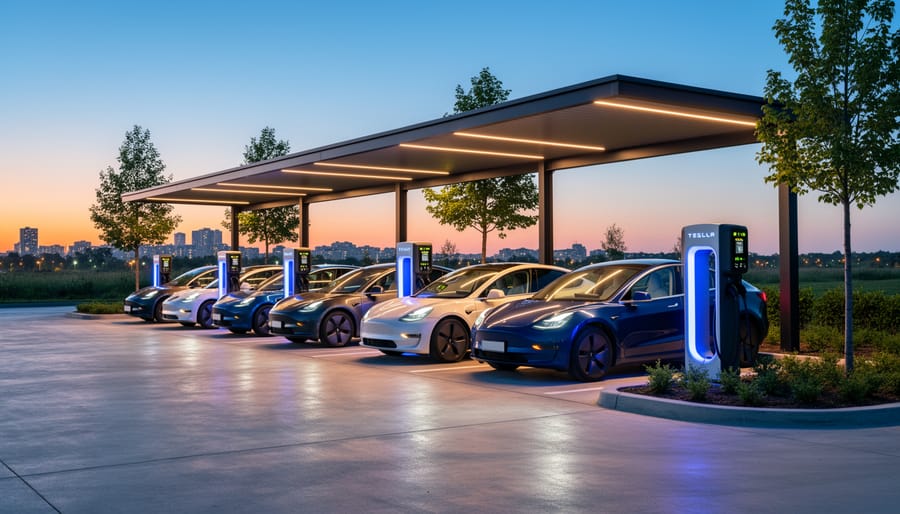
Commercial charging installations represent a significantly larger undertaking than residential projects, with scope and costs scaling to serve multiple vehicles and higher traffic volumes. Businesses typically invest in Level 2 or DC fast-charging stations, with equipment alone ranging from several thousand to tens of thousands of dollars per unit depending on power output and charging speed. Installation complexity multiplies when accounting for multiple charging points, commercial-grade electrical infrastructure upgrades, ADA accessibility requirements, and parking lot modifications. Site preparation, trenching for underground conduit, and panel capacity expansion drive costs well beyond typical home installations. Many businesses pursue charging infrastructure as both an employee benefit and customer amenity, viewing the investment through a longer-term lens that includes potential revenue generation, utility demand charges, and fleet electrification support.
Installation Cost Breakdown: Where Your Money Goes
Equipment and Hardware
The charger unit represents your most visible investment, and pricing varies considerably based on capabilities. At the entry level, basic Level 2 AC chargers start around $400, offering reliable charging without smart features or connectivity. These budget-friendly units deliver consistent performance for straightforward overnight charging needs.
Mid-range chargers in the $600-$800 bracket typically add Wi-Fi connectivity, smartphone app control, and charging scheduling. You’ll find adjustable amperage settings and energy monitoring at this price point, giving you better control over charging sessions and electricity usage tracking.
Premium chargers approaching the $1,200 ceiling include advanced load management, voice assistant integration, and weather-resistant enclosures for outdoor installation. Models at this tier often feature larger displays, faster charging capabilities, and integration with home energy management systems. The higher cost brings enhanced durability, extended warranties, and compatibility with future vehicle technology.
Brand reputation and build quality also influence pricing within this range. Established manufacturers with proven track records command premium pricing compared to newer market entrants, though both can meet safety standards and deliver reliable performance.
Permits and Inspections
Most jurisdictions require a permit for EV charging installations, which typically costs between $50 and $200, though exact amounts vary by jurisdiction. Your electrician often handles the permitting paperwork as part of their service, though some municipalities require homeowners to apply directly. Inspection requirements differ based on local codes, with most areas mandating a final inspection once installation is complete to verify compliance with electrical and safety standards. Permitting rules for apartment EV chargers or multi-unit properties can be more complex, sometimes involving building management approval alongside municipal permits. Building a permit into your budget prevents surprises, and working with a licensed electrician familiar with local requirements streamlines the process and helps avoid failed inspections that delay your charger’s use.
Electrical Work and Labor
Professional installation by a licensed electrician is the safest and most common approach for charging point setup. The electrician assesses your home’s electrical capacity, determines whether your existing panel can support the additional load, and handles all wiring from the panel to your chosen charging location.
Panel upgrades represent a significant consideration if your current system can’t accommodate the charger’s power requirements. Many older homes need this work to safely support Level 2 charging, which typically draws 40 to 50 amps. The electrician runs dedicated wiring from the panel to the charging point location, installs the appropriate circuit breaker, and ensures all work meets local electrical codes.
Labor requirements vary based on installation complexity. A straightforward installation in a garage adjacent to your electrical panel requires less work than running wiring through finished walls or across long distances. The electrician also coordinates required inspections and ensures your installation qualifies for any available local or utility incentives. All professional installations should include proper grounding, weatherproof connections for outdoor installations, and documentation of code compliance for warranty protection and future home sales.
Six Factors That Influence Your Installation Price
Charger Features and Power Output
The verified $400-$1,200 equipment range reflects significant variation in charger capabilities and features. Basic Level 2 chargers at the lower end deliver sufficient charging speed for overnight use but lack connectivity features. Mid-range units ($600-$800) typically add Wi-Fi connectivity, smartphone app control, and scheduling capabilities that help you take advantage of off-peak electricity rates. Premium chargers approach the upper limit with faster charging speeds, weatherproof enclosures for outdoor installation, and integration with home energy management systems. Brand reputation also influences pricing, established manufacturers with proven reliability and comprehensive warranties command higher prices than newer market entrants. Power output matters considerably: a 32-amp charger delivers roughly 25 miles of range per hour, while a 40-amp or 48-amp unit can provide 30-40 miles per hour, though higher-output models require correspondingly robust electrical service. When comparing Tesla charger options or other brands, match the charger’s capabilities to your vehicle’s onboard charging capacity and typical daily driving needs rather than simply buying maximum power output.
Your Home’s Electrical Capacity
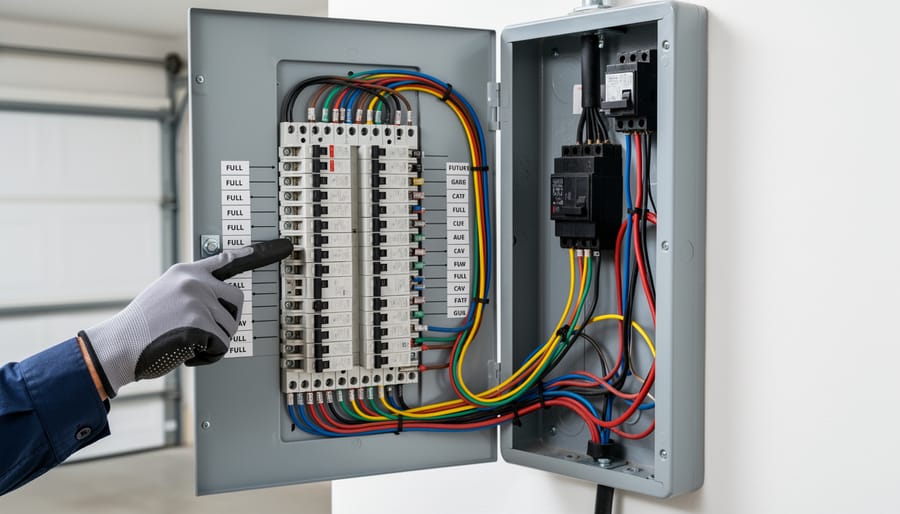
Your home’s electrical panel is like a highway with a finite number of lanes, it can only handle so much traffic before you need to add capacity. Most EV chargers draw 30-50 amps, and if your current panel is already near its limit (common in older homes with 100-amp service), you’ll need an upgrade to a 200-amp panel before installing a charging point. This upgrade typically involves replacing the main service panel and may require utility coordination, adding substantially to your total investment. A licensed electrician can assess your panel during a site evaluation and tell you whether your existing capacity is sufficient or if an upgrade is necessary. Homes built in recent decades with 200-amp service often have room to add a dedicated circuit without panel replacement, keeping costs focused on the charger and wiring rather than a major electrical overhaul.
Installation Location and Distance
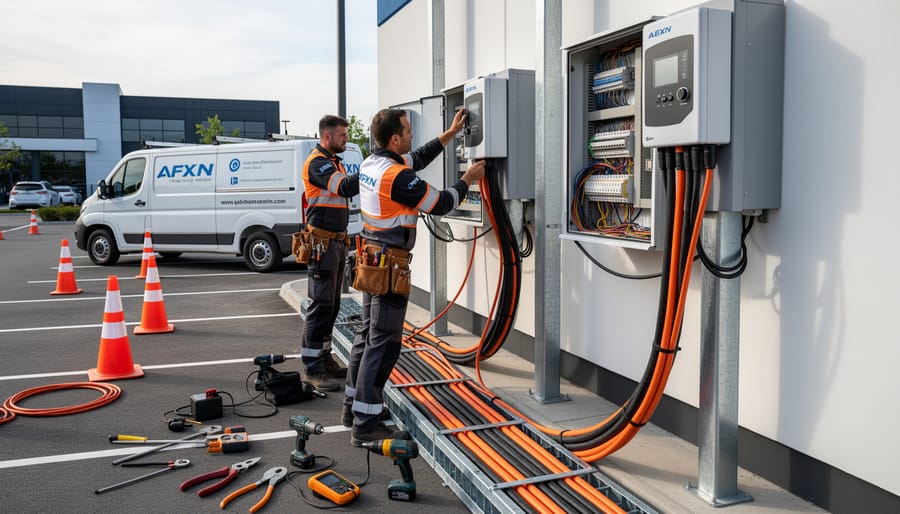
The distance between your electrical panel and your chosen charging location directly impacts installation costs through additional wiring and labor. A charging point mounted in a garage next to your main panel requires minimal cable runs, keeping material and installation time low. Installing a charger on the opposite side of your home, in a detached garage, or near a driveway far from the panel means running significantly more electrical wire, often through walls, attics, or underground conduit. Each additional foot of distance adds material costs and increases the complexity of the job, particularly when routing requires drilling, trenching, or navigating obstacles. Choosing a location closer to your panel whenever practical helps control your total investment.
Property-Specific Requirements
Your property’s unique characteristics can significantly affect installation complexity and cost. Older homes with aluminum wiring or outdated electrical panels often require extensive upgrades before a charger can be safely installed. Detached garages pose particular challenges, as running conduit underground or overhead to reach the charging location adds both materials and labor time.
Wall construction matters too, mounting a charger on brick, concrete, or finished interior walls typically costs more than installation on standard wood-framed garage walls due to specialized tools and additional labor. Properties with limited panel access, tight crawl spaces, or finished basements where new wiring must be carefully routed will also see higher quotes from electricians navigating these obstacles.
Local Permit and Inspection Fees
Permit fees vary significantly by location, typically falling within the $50 to $200 range. Urban areas and municipalities with stricter building codes often charge at the higher end, while smaller jurisdictions may require minimal fees. Some counties bundle electrical permits into broader home improvement categories, while others charge specifically for EV charger installations. Before hiring an electrician, check with your local building department to understand exact permit requirements and costs in your area.
Smart Technology and Connectivity
Smart chargers with Wi-Fi connectivity and app integration typically add $100 to $300 to equipment costs compared to basic models. These features allow you to monitor charging sessions, schedule off-peak charging times, and track energy usage from your smartphone. While the upfront premium is modest, smart capabilities can deliver ongoing savings through optimized charging schedules and utility time-of-use rates, making them worthwhile for many EV owners who want control and visibility over their charging costs.
Professional Installation vs. DIY: Making the Right Choice
When Professional Installation Makes Sense
Most homeowners should hire a licensed electrician for EV charging installation rather than attempting DIY work. You need professional help when your project involves electrical panel upgrades, which most installations require, or any work inside your main service panel. Licensed electricians ensure your installation meets National Electrical Code requirements and local building codes, protecting you from safety hazards and potential insurance complications. Professional installation also preserves your charger’s warranty, since most manufacturers void coverage for non-compliant DIY work.
Hiring an expert becomes essential if your installation site sits far from your electrical panel, requiring extensive conduit runs or trenching. Similarly, if your home’s existing electrical capacity can’t support a Level 2 charger’s 40-amp circuit, you’ll need a panel upgrade that only licensed professionals can legally perform. Taking time to choose an installer who understands EV charging requirements prevents costly mistakes and ensures your charging point operates safely for years to come.
Limited DIY Opportunities
Most homeowners can safely handle basic tasks like mounting the charging unit to a wall and organizing cable management once the electrical work is complete. These finishing touches require only standard tools and don’t involve live electrical connections. However, everything involving your home’s electrical system, running new wiring, connecting circuits to your panel, installing dedicated breakers, and making the final hardwired connections to the charger, must be performed by a licensed electrician. These tasks require specialized knowledge of electrical codes, proper grounding, and load calculations. Attempting electrical work yourself creates serious safety risks, violates building codes in most jurisdictions, and will void your charger’s warranty. Even if you’re comfortable with basic home repairs, the electrical components of EV charger installation fall squarely in professional territory.
Warranty and Insurance Considerations
Professional installation by a licensed electrician typically preserves your charger’s manufacturer warranty, which often requires compliance with electrical codes and proper mounting specifications. DIY installation may void equipment warranties if the manufacturer requires certified installation, leaving you responsible for repair or replacement costs. Your homeowner’s insurance generally covers professionally installed charging points as permanent home improvements, but DIY electrical work can create liability issues if installation errors cause damage or fire. Before choosing your installation approach, review your charger’s warranty terms and contact your insurance provider to confirm coverage requirements, some insurers require permitted, professional electrical work to maintain full policy protection for new 240-volt installations.
Government Incentives and Financial Support (2026 Update)
State and Local Rebate Programs
Even with the federal tax credit now expired, many states and municipalities continue to offer rebates and incentives for EV charging installation. These programs vary widely by location, with some states providing several hundred dollars in rebates while others offer tiered incentives based on income level or charger type.
Start by checking your state energy office’s website and searching for “EV charging rebates” plus your state or city name. Many programs require pre-approval before installation begins, so research available incentives before hiring a contractor. Qualification criteria typically include using licensed electricians, installing certified equipment, and submitting proof of purchase and permits within specified timeframes.
Local air quality management districts and regional clean energy programs often maintain additional rebate opportunities, particularly in areas working to reduce emissions. Some municipalities also waive or reduce permit fees for EV charging installations as part of broader sustainability initiatives. Since these programs change frequently and funding can run out mid-year, verify current availability and application deadlines before counting them in your budget.
Utility Company Incentives
Many electricity providers offer financial incentives to encourage EV charging infrastructure, making them a valuable resource now that the federal tax credit expired in June 2026. Utility programs typically fall into three categories: upfront installation rebates (often $250-$500), discounted or free charger equipment for customers who commit to off-peak charging, and reduced electricity rates during nighttime hours when grid demand is lower. Some utilities also provide “make-ready” programs that cover the cost of running electrical service to your parking area, significantly reducing your out-of-pocket installation expenses. Contact your local electric company directly or check their website’s EV section to see what programs are currently available in your service area, as offerings vary widely by region and provider.
Maximizing Available Support
Start by identifying every incentive program available in your area, since the federal tax credit expired in June 2026. Visit your state energy office website and your local utility’s EV charging page to find current rebates, many utilities offer $200-$500 rebates or free off-peak charging rates. Check your municipality’s website for city or county programs that may cover permit fees or provide installation grants. Document all deadlines and requirements before purchasing equipment, as most programs require pre-approval or specific charger models. If you’re considering pairing your charger with renewable energy, research incentives for solar charging stations which may qualify for separate solar incentives. Apply for every program you’re eligible for, stacking state, local, and utility incentives can significantly offset your installation investment even without federal support.
Frequently Asked Questions
How long does a typical charging point installation take?
Most residential installations are completed within four to eight hours if your electrical panel has adequate capacity. Projects requiring panel upgrades or significant electrical work can extend to one or two days depending on complexity and permit inspection schedules.
Are there still federal tax credits available for EV charger installation in 2026?
No. The federal EV charger tax credit that covered 30% of installation costs up to $1,000 expired on June 30, 2026. However, many state, local, and utility programs still offer rebates and incentives worth checking in your area.
How much more does Level 2 charging equipment cost compared to Level 1?
Level 1 charging uses a standard 120V outlet and requires no special equipment beyond the cable typically included with your EV, making it essentially free for basic charging. Level 2 chargers operate at 240V and cost $400 to $1,200 for the equipment alone, but they charge your vehicle five to seven times faster.
Should I wait for installation prices to drop?
Charging point installation costs have remained relatively stable, and waiting means delaying the convenience and potential fuel savings of home charging. With the federal credit now expired, securing any remaining state or utility incentives sooner rather than later makes more financial sense than hoping for future price drops.
Getting multiple quotes from licensed electricians helps you understand the specific costs for your property and ensures competitive pricing. Be upfront about your electrical panel’s age and capacity during initial consultations so installers can provide accurate estimates that account for any necessary upgrades. Most installers will visit your property for a free assessment before providing a detailed quote.
The installation timeline depends heavily on permit processing in your jurisdiction and electrician availability. Some areas issue permits within days, while others require two to three weeks for review and approval. Scheduling flexibility with your installer and submitting complete permit applications speeds up the overall process considerably.
Installing an EV charging point represents a significant step toward sustainable transportation, and understanding the complete cost picture helps you make an informed decision. While equipment costs typically range from $400 to $1,200 for standard Level 2 chargers, and permit fees add another $50 to $200, your total investment will depend on your home’s electrical setup and specific installation requirements.
The financial landscape shifted in 2026 when the federal EV charger tax credit expired on June 30. Don’t let this discourage you, many states, municipalities, and utility companies still offer rebates and incentives. Check with your local utility provider and state energy office for current programs that can offset installation costs.
Request quotes from at least three licensed electricians to compare pricing and scope of work. Choose installers experienced with EV charging systems who can explain what your specific property needs.
Think of this installation as infrastructure for the future. You’re not just adding a charger, you’re supporting cleaner transportation, reducing your carbon footprint, and preparing your home for the ongoing shift toward electric mobility. The upfront investment pays dividends through years of convenient, emissions-free charging at home.