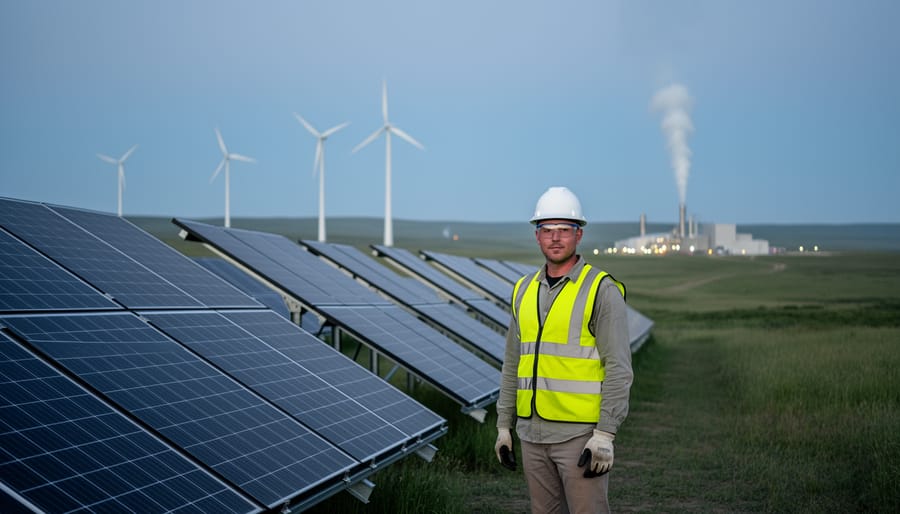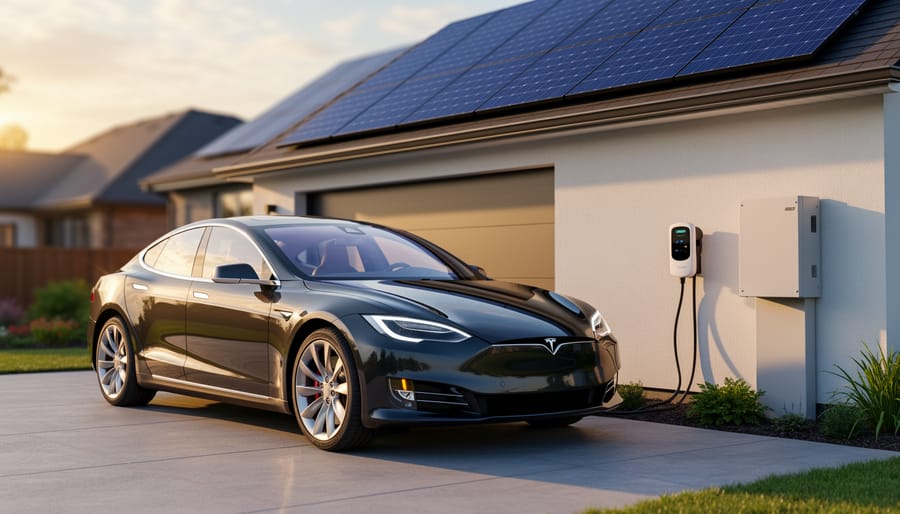
A Tesla solar charging station is a home or business energy system that combines rooftop solar panels with battery storage to generate clean electricity for charging Tesla vehicles, eliminating reliance on the grid and reducing fuel costs to near zero.
For the growing number of Tesla owners committed to sustainable transportation, charging your vehicle with solar power represents the final step toward truly emissions-free driving. While your EV produces no tailpipe pollution, the electricity it draws from the grid may still come from fossil fuels. Solar charging breaks that connection entirely.
This guide explains how solar charging systems work, what equipment you need, and whether installing one makes financial sense for your situation. You’ll learn the difference between grid-tied and off-grid setups, how to size a system for your driving habits, and what federal and state incentives can offset installation costs. Whether you’re a current Tesla owner looking to maximize your environmental impact or a prospective buyer evaluating the total ownership experience, understanding solar charging helps you make informed decisions about energy independence and long-term savings.
What Tesla Solar Charging Stations Mean for EV Owners
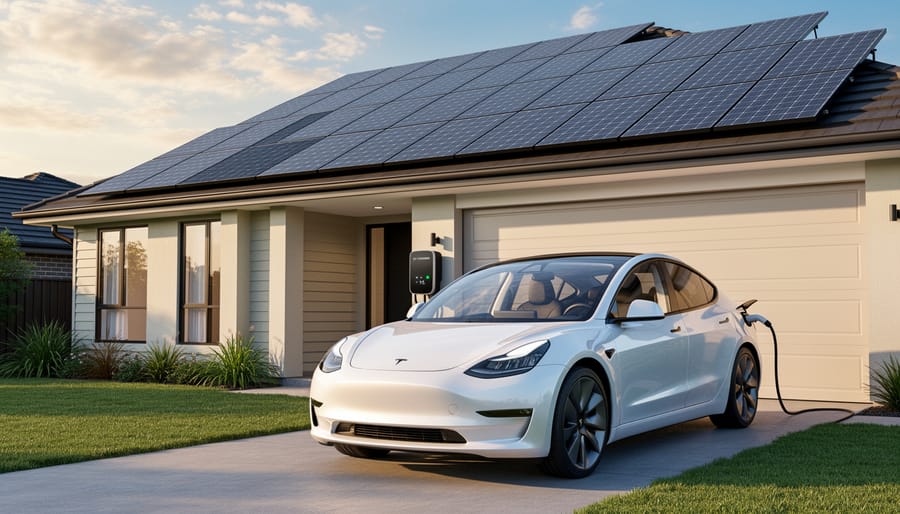
A Tesla solar charging station isn’t a single piece of equipment you can buy off the shelf. Instead, it’s an integrated system that pairs solar panels with your electric vehicle charger, allowing you to power your Tesla with electricity generated from sunlight rather than pulling it entirely from the grid.
At its core, the setup combines several components working together: rooftop or ground-mounted solar panels capture sunlight and convert it into electricity, an inverter transforms that power into a form your home can use, and your Tesla charging equipment delivers it to your vehicle’s battery. Many owners add battery storage systems to capture excess solar energy during the day for charging after sunset.
- Solar Charging Station
- An integrated system combining solar panels, inverters, and EV charging equipment to power electric vehicles with renewable energy generated on-site.
- Inverter
- A device that converts the direct current (DC) electricity produced by solar panels into alternating current (AC) that your home electrical system and Tesla charger can use.
- Net Metering
- A billing arrangement where excess solar electricity you generate flows back to the grid, earning credits that offset power drawn when your panels aren’t producing enough energy.
- Solar Array
- The collection of multiple solar panels installed together on your roof or property to generate electricity from sunlight.
- Level 2 Charger
- A 240-volt charging station that delivers faster charging speeds than standard household outlets, typically adding 25-30 miles of range per hour to your Tesla.
What confuses many prospective buyers is whether they need Tesla-branded equipment for solar charging to work. The short answer: you don’t. While Tesla sells solar panels and the Powerwall battery system, any quality solar installation can charge your Tesla as long as it connects to your home’s electrical system. Tesla’s Wall Connector charging equipment works with solar arrays from any manufacturer, and third-party solar panels work just as well with Tesla chargers.
The key distinction is between the solar generation equipment and the vehicle charging station itself. Your solar system feeds power into your home’s electrical panel, and your Tesla charger draws from that same panel, whether the electrons came from solar panels or the grid makes no difference to the vehicle. This flexibility means you can choose solar equipment based on cost, quality, and installer reputation rather than being locked into a single brand.
How Solar Charging for Tesla Vehicles Works
Daytime vs. Nighttime Charging
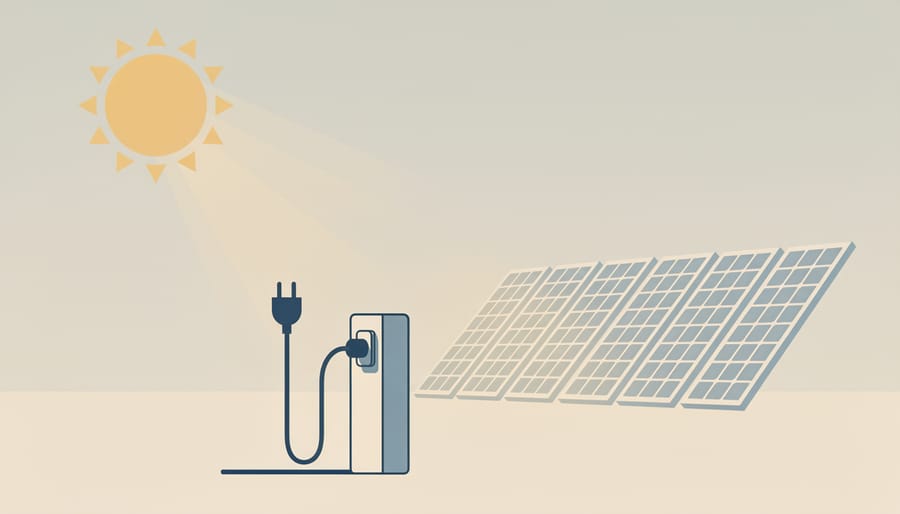
During sunny hours, your solar panels generate electricity that flows directly to your Tesla charger. If you’re home during the day and plug in, your vehicle charges using real-time solar power at essentially zero cost. Any excess energy your panels produce while the car isn’t charging either powers your home, charges a battery storage system, or flows back to the grid (earning you credits through net metering programs where available).
After sunset, solar panels stop generating electricity. Without battery storage, nighttime charging automatically draws power from the electrical grid just like any other household appliance. You’ll pay your standard utility rate for this electricity, though many utility companies offer time-of-use plans with lower overnight rates specifically designed for EV charging.
Battery storage systems like the Tesla Powerwall change this equation significantly. A Powerwall stores excess solar energy generated during the day, then releases it after dark to power your home and charge your Tesla. With sufficient battery capacity, you can achieve near-complete energy independence, charging your vehicle with stored solar power even at midnight. Most Powerwalls store 13.5 kWh of usable energy, enough to add roughly 40 to 50 miles of range to a Model 3.
The practical reality for most Tesla owners is a hybrid approach. They charge primarily with solar during daylight hours when home, use stored battery power for evening top-ups, and occasionally draw from the grid during extended cloudy periods or when battery reserves run low. Over a full billing cycle, daytime solar production typically offsets most or all grid consumption through energy credits.
Energy Requirements for Tesla Models
Understanding the energy demands of your Tesla helps you size your solar charging system correctly. Different Tesla models have varying electricity needs based on their battery capacity and efficiency ratings.
A Model 3 Standard Range Plus, for example, consumes roughly 0.26 kWh per mile. If you drive 40 miles daily, that’s about 10.4 kWh needed each day to replenish your battery. The Long Range Model 3 uses slightly more at around 0.28 kWh per mile, requiring 11.2 kWh for the same distance. Model Y owners should plan for 0.30 to 0.33 kWh per mile depending on configuration, while the larger Model S and Model X can require 0.35 to 0.40 kWh per mile due to their size and weight.
To generate enough solar electricity for these needs, consider that a typical residential solar panel produces about 1.5 to 2 kWh daily in moderate sun conditions. For our Model 3 driver covering 40 miles per day, you’d need roughly six to seven panels dedicated solely to vehicle charging. That calculation assumes decent sun exposure and doesn’t account for home electricity use.
Your actual Tesla energy use per mile will vary with driving habits, terrain, weather, and use of climate controls. Highway speeds consume more energy than city driving, and winter heating draws significantly more power than summer air conditioning. Many owners install larger systems than minimum requirements to cover seasonal variations and provide buffer capacity for higher-mileage days.
Components of a Solar Charging System
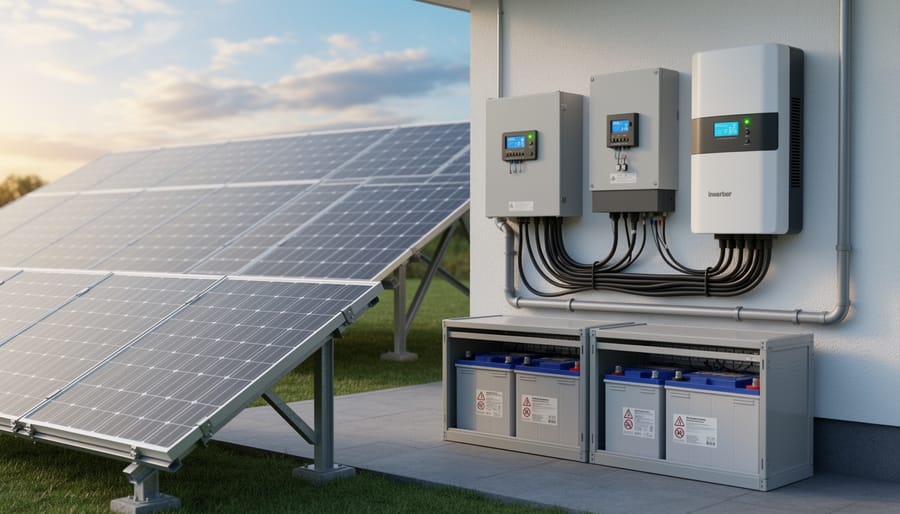
A complete solar charging system for your Tesla comprises several interconnected components working together to convert sunlight into vehicle-ready electricity. Understanding each piece helps you make informed decisions when planning your installation.
Solar Panels
These capture sunlight and convert it into direct current (DC) electricity. Most residential installations use monocrystalline panels rated between 300-400 watts each. You’ll typically need 15-25 panels for a system that fully supports daily Tesla charging, though your exact requirements depend on your driving habits and local sunlight availability. Quality panels come with 25-year performance warranties.
Inverter
The inverter transforms DC electricity from your panels into the alternating current (AC) your home and charging equipment use. String inverters handle your entire array, while microinverters attach to individual panels for better performance if your roof has shading issues. Hybrid inverters add battery management capabilities for systems with storage.
Mounting Hardware
Racking systems secure panels to your roof or ground. They’re engineered to withstand wind, snow, and seismic events while maintaining optimal panel angle for sun exposure. Rail systems dominate residential installations, while commercial setups might use ballasted systems that don’t penetrate the roof membrane.
Tesla Wall Connector or Charging Equipment
Your charging station delivers power from the electrical system to your vehicle. The Tesla Wall Connector offers adjustable amperage up to 48 amps and can add up to 44 miles of range per hour. It connects to your home’s electrical panel and communicates with your vehicle to manage charging speed.
Battery Storage (Optional)
Systems like the Tesla Powerwall store excess solar energy for nighttime charging or backup power during outages. A single 13.5 kWh Powerwall can charge a Model 3 roughly 40-50 miles. While not required, storage maximizes your solar independence and ensures you’re charging with your own clean energy around the clock.
Monitoring System
Software tracks energy production, consumption, and battery levels in real time. Tesla’s app shows how much solar energy is charging your car versus running your home, helping you optimize usage patterns.
Electrical Panel Upgrades
Older homes may need panel upgrades to handle the combined load of solar equipment and high-amperage charging. A 200-amp service typically suffices, though your electrician will assess your specific situation during the site evaluation.
Types of Solar Charging Setups
Tesla owners have several solar charging configurations to choose from, each offering different levels of independence, complexity, and upfront investment. Your ideal setup depends on your charging needs, budget, property characteristics, and how much energy autonomy you want from the utility grid.
The most common solar charging setups include:
- Grid-tied systems without storage, Solar panels feed power directly to your home and charger, with the grid covering nighttime and high-demand periods
- Grid-tied systems with battery backup, Combines solar panels with storage like Tesla Powerwall to charge day or night and maintain power during outages
- Off-grid systems, Fully independent setups relying entirely on solar and substantial battery capacity, rare for most residential applications
- Community solar programs, Subscription-based arrangements where you receive credits from a shared solar farm without installing panels on your property
- Workplace and commercial installations, Larger-scale systems serving multiple charging stations for employee fleets or public use
Grid-tied systems without storage represent the most affordable entry point. Your solar panels generate power during daylight hours, and any excess production flows back to the grid for credits that offset nighttime charging costs. This setup works well if you charge during the day or don’t mind drawing grid power after sunset. You’ll still see a smaller electricity bill, but you won’t have backup power during outages.
Adding battery storage transforms a basic grid-tied system into a more resilient solution. With one or more Powerwall units, you can store daytime solar production for evening charging sessions and maintain critical loads during grid failures. This configuration costs significantly more upfront but delivers true energy independence for daily driving needs.
Commercial installations typically feature larger solar arrays paired with Level 2 or DC fast chargers. Businesses use these to offer employee charging benefits, support delivery fleets, or provide customer amenities. These systems often justify higher costs through tax advantages and the ability to serve multiple vehicles simultaneously.
Real-World Applications and Benefits
Tesla owners are installing solar charging stations across a wide range of settings, from suburban homes to commercial properties, transforming how they power their vehicles. A typical residential setup allows daily commuters to charge their Model 3 or Model Y during the day when solar production peaks, or store excess energy in a Powerwall for evening charging. Homeowners in California, Texas, and Arizona report charging their Teslas entirely from rooftop solar during spring and summer months, effectively eliminating fuel costs for their daily 30-50 mile commutes.
Workplace charging stations powered by solar canopies are gaining traction among forward-thinking employers. Companies install carport-style solar arrays that generate clean energy while providing shaded parking for employee Teslas and other EVs. These installations serve dual purposes: reducing the business’s electricity costs while offering a valuable employee benefit that supports recruitment and retention.
Fleet operators managing multiple Tesla vehicles have discovered significant advantages in solar charging infrastructure. Delivery companies, utility providers, and municipal fleets that return vehicles to a central depot each evening can charge entire fleets overnight using daytime solar production stored in commercial battery systems. The predictable charging schedules make solar economics particularly attractive for fleet applications.
Vacation properties and remote locations represent another growing application. Tesla owners with weekend cabins or rural properties often install solar charging systems to avoid range anxiety when visiting areas with limited public charging infrastructure. Off-grid solar installations with sufficient battery capacity allow these owners to arrive, recharge, and return home without relying on the local utility.
The environmental impact extends beyond individual vehicles. A single Tesla charged exclusively by solar prevents roughly 4,000 pounds of CO2 emissions annually compared to a gas-powered sedan. Multiply that across thousands of installations, and the collective carbon reduction becomes substantial. Solar charging also reduces strain on the electrical grid during peak demand periods, since much of the energy generation and consumption happens on-site.
Financial benefits compound over time as electricity rates increase. While a complete solar charging system requires $15,000-30,000 upfront investment after incentives, the elimination of both gasoline and a significant portion of home electricity costs creates meaningful savings. Many states offer additional rebates for EV charging equipment, and some utilities provide special rates or credits for solar customers who charge vehicles during off-peak hours. Energy independence provides protection against future utility rate hikes and fuel price volatility, giving owners predictable transportation costs for decades.
Installation Considerations and Costs
Before you invest in a solar charging station, you’ll need a professional site assessment to evaluate several crucial factors. Your roof condition matters significantly, panels require structurally sound surfaces that won’t need replacement within the next 20 years. South-facing roofs with minimal shade deliver optimal performance, though east-west orientations can still work effectively with proper system design.
Your electrical panel capacity determines whether upgrades are necessary. Most Tesla charging installations require 200-amp service, and adding solar often pushes older 100-amp panels beyond safe limits. Plan for a panel upgrade if your home was built before 1990. The electrician will also verify that your system can connect to any EV charging equipment you plan to use.
Permitting requirements vary by municipality but typically include building permits, electrical permits, and utility interconnection agreements. Your installer handles most paperwork, though approval timelines range from two weeks in streamlined jurisdictions to three months in areas with backlogged permit offices. Factor this waiting period into your planning.
For 2026, complete residential solar charging systems cost between $18,000 and $35,000 installed, depending on system size and component quality. A typical setup for a Model 3 driven 12,000 miles annually includes 15-20 solar panels, inverter equipment, mounting hardware, and a Level 2 charger. Adding battery storage like a Powerwall increases costs by $11,000 to $15,000 but provides backup power and nighttime charging capability.
These upfront numbers look more manageable with available incentives. The federal Investment Tax Credit covers 30% of total system costs through 2032, reducing a $25,000 installation to $17,500 after the credit. Many states offer additional rebates, California provides up to $3,000 for solar installations, while Massachusetts offers performance-based incentives that pay ongoing credits. Some utilities also provide rebates for installing charging equipment or enrolling in time-of-use programs that maximize your solar investment.
Installation typically takes two to five days once permits are approved, though experienced installers can complete straightforward projects in a single day. Understanding common installation challenges helps with EV charging troubleshooting if issues arise during setup. Most homeowners see full system activation within six to twelve weeks from contract signing.
Frequently Asked Questions
Can I charge my Tesla exclusively with solar power?
Yes, but only if you have a battery storage system to provide power at night and during cloudy periods. Without storage, you’ll draw from the grid when the sun isn’t shining, though your daytime solar production can offset that usage.
How many solar panels do I need to charge a Tesla?
Most Tesla owners need 6 to 12 panels for daily driving, depending on their commute and model. A Model 3 driven 40 miles daily requires roughly 12 kWh, which typically means a 4-5 kW solar array, about 10 standard 400-watt panels.
What happens on cloudy days?
Your solar panels still generate electricity on overcast days, just at reduced capacity, typically 10 to 25 percent of full output. Your system automatically draws supplemental power from the grid or your battery storage to maintain charging capability.
Do I need Tesla solar panels or can I use any brand?
Any quality solar panel system works perfectly fine for charging your Tesla. The vehicle doesn’t care about panel brand, it only receives electricity from your home’s electrical system, whether that power comes from Tesla solar products or third-party installations.
How long does installation take?
Complete solar charging system installation typically takes one to three months from initial consultation to final connection. Most of that time involves permitting, utility approvals, and scheduling rather than actual installation work, which usually wraps up in two to four days.
Will this work with my existing Tesla charger?
Absolutely. Solar panels integrate with your home’s electrical panel, which already powers your current charging equipment. If your charger won’t go in or you need to fix charging issues those problems aren’t solar-related, they’re connection or equipment matters. You might consider a Tesla charger adapter if you want flexibility for different charging stations, but your home solar setup feeds whatever charger you’ve already installed.
These questions reflect what homeowners consistently ask when they’re weighing whether solar charging makes sense for their situation. The answers cut through technical complexity while acknowledging real limitations, you can’t run purely on sunshine without storage, and cloudy weather does reduce output. What matters is that solar remains a viable, practical solution for most Tesla owners who want to reduce their reliance on grid power and align their transportation with renewable energy values.
Tesla solar charging stations offer more than just a way to power your vehicle, they represent a fundamental shift in how you think about transportation and energy consumption. By combining solar panels with EV charging infrastructure, you’re taking control of both your fuel costs and your environmental footprint.
The benefits stack up impressively. You’ll reduce carbon emissions with every charge, slash your monthly electricity bills as solar offsets grid power, and gain energy independence that insulates you from utility rate hikes. The financial case gets stronger when you factor in the 30% federal solar tax credit and state-specific rebates that can cut thousands off your installation costs in 2026.
Starting this journey doesn’t require guesswork. A qualified EV charging installer can assess your roof orientation, electrical capacity, and daily driving patterns to determine exactly what system size makes sense for your situation. They’ll help you understand whether a basic grid-tied setup meets your needs or if adding battery storage gives you the resilience you’re after.
The technology is proven, the incentives are substantial, and the environmental impact is measurable. Whether you drive 20 miles daily or 100, there’s a solar charging solution that fits your lifestyle. You’ve already made the switch to electric transportation, why not power it with sunshine? Taking this next step puts you in the driver’s seat for both your vehicle and your energy future.